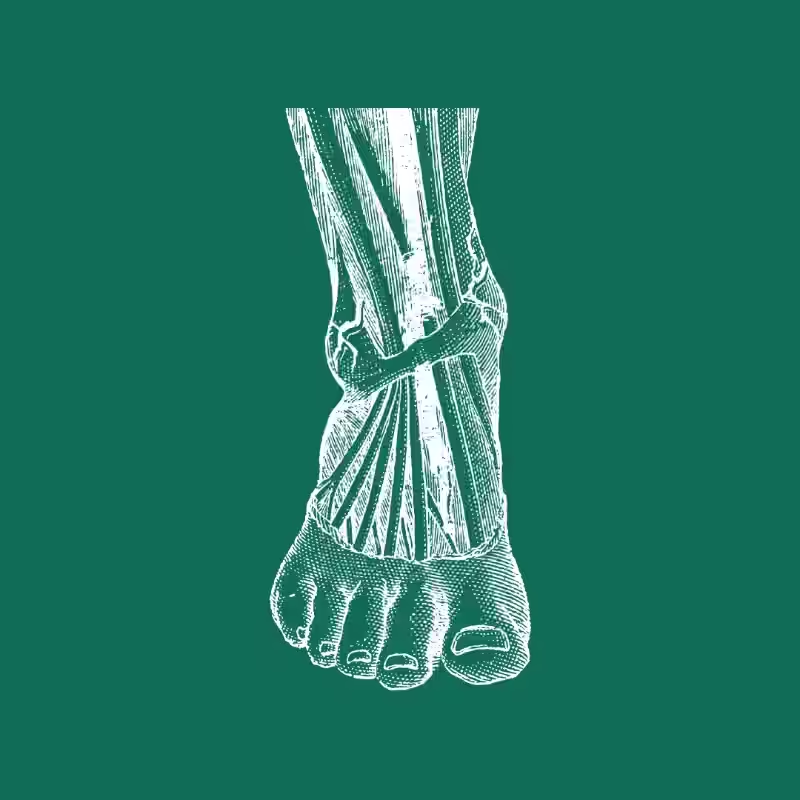
Ankle complaints can stem from various causes and symptoms. The ankle joint is formed by the tibia, fibula, and foot bones, with ligaments, tendons, and fascia providing stability through their cooperative action. The ankle is also part of the kinetic chain, which includes the foot, knee, hip, and core.
Ankle injuries can occur due to repetitive stress on the surrounding tissues (bones, ligaments, muscles, tendons), such as from excessive running without proper conditioning, or from compensating for other injuries, leading to an imbalance in foot loading. Ankle injuries can also result from sudden trauma, like twisting the ankle too far inward or outward, typically due to loss of control.
Here is some information on treatment options:
1. Treatment
The rehabilitation program aims to gradually build tissue strength and flexibility, restore function, and prevent future injuries. Techniques such as joint mobilization and soft tissue massage are used to reduce pain and improve mobility. Customized exercises focus on strengthening the muscles around the ankle to enhance stability and flexibility. Education on managing daily activities and sports is also essential to prevent reinjury.
2. What You Can Do Yourself
During the initial phase of recovery, it’s important to balance rest with gentle movement. Limit activities that worsen the pain, but perform gentle exercises to maintain ankle mobility. This helps improve blood flow to the injured area, providing the necessary nutrients for healing and preventing stiffness, leading to quicker recovery.
As rehabilitation progresses, follow the physiotherapist’s guidance for strengthening exercises, stability training, and balance exercises to improve coordination. Gradually return to normal activities, with a focus on stability.
For long-term health, maintain a routine of strength and flexibility exercises that include the entire kinetic chain (ankle, leg, and core) to keep the ankle stable and reduce the risk of future injuries.
Below, we will discuss the most common ankle injuries where physiotherapy can play a key role in recovery:
This injury occurs when the ligaments that connect the bones of the ankle are overstretched or torn. It commonly happens from twisting the ankle or landing awkwardly.
2. Achilles Tendonitis
The Achilles tendon connects the heel bone to the calf muscles. Inflammation of this tendon, caused by sports or overload, leads to Achilles tendonitis, resulting in pain and swelling at the back of the ankle.
3. Plantar Fasciitis
The plantar fascia is a band of tissue that runs from the heel to the toes. Inflammation of this tissue, called plantar fasciitis, causes heel pain, especially in the morning.
4. Stress Fracture
A stress fracture is a small crack in a bone within the foot or ankle, often caused by repetitive activities like running that place excessive stress on the bones.
PLAYLIST
Ankle Series
This compilation series will demonstrate exercises that you can do to increase your ankle strength and mobility.
We use cookies to help you navigate efficiently and perform certain functions. You can choose which categories to allow below. Cookies categorised as Necessary are always active.
We also use third-party cookies for analytics and advertising. These are only stored with your consent. You can update or withdraw consent at any time via the cookie icon at the bottom-left. This site operates under UK GDPR, the Data Protection Act 2018, and the Privacy and Electronic Communications Regulations (PECR). Cookie Policy • Privacy Policy
Always Active
Necessary cookies are required for core site features including security, network management, and consent storage.
Cookie
Duration
Description
hmdg_cookie_consent
180 days
Stores your cookie consent preferences.
PHPSESSID
Session
WordPress session identifier.
wordpress_logged_in_*
Session
WordPress login authentication.
Functional cookies enable enhanced features such as live chat and remembering preferences.
Cookie
Duration
Description
wp-settings-*
1 year
Stores user interface preferences.
Analytics cookies help us understand visitor behaviour. Controls analytics_storage for Google Analytics 4.
Cookie
Duration
Description
_ga
2 years
Google Analytics — distinguishes users.
_ga_*
2 years
Google Analytics 4 — session persistence.
_gid
24 hours
Google Analytics — distinguishes users.
_gat
1 minute
Google Analytics — throttles request rate.
Performance cookies collect aggregate, anonymous data about site performance.
Cookie
Duration
Description
_gat_gtag_*
1 minute
Google Tag Manager — rate throttle.
Marketing cookies track visits to deliver relevant ads. Controls ad_storage, ad_user_data, and ad_personalization.